 Elegant
 Simple
 Two Piece
 A-Line
 Convertible
 Fit & Flare
 Mermaid
 Midi
Midi Princess
 Sheath
 Short
Short Wedding Jumpsuits
- Which silhouettes suit an open back?
A-line, sheath, column, fit-and-flare, mermaid, and modified ballgown all suit open backs beautifully. The silhouette of the gown sets the formality, while the open back adds a feature element. A clean A-line with a soft V open back reads romantic, while a sheath with a deep plunge open back reads modern and considered.
- What open back silhouette suits a beach wedding?
For a beach wedding, soft A-line or column silhouettes with a strappy or illusion lace open back work beautifully. The exposed back catches sea breezes and photographs stunningly against the horizon. Avoid heavily trained mermaid silhouettes, which struggle on sand. A moderate sweep or brush train keeps the gown manageable on coastal terrain.
- Are open back silhouettes suitable for a curvy bride?
Yes. Open backs flatter most curvy figures beautifully when the silhouette is built with the right internal support. Look for a structured bodice with full cup support, a fitted waist that defines the silhouette, and an open back that suits your specific back shape. A bridal seamstress can adjust the back depth and width during alterations.
- Will I need a special bra with an open back gown?
Yes, almost always. Open backs make standard bras impossible. Most brides rely on built-in cup support sewn into the bodice, low-back bras with thin strap extensions, or adhesive bra cups. Some open back gowns include internal grip strips or boning that supports the bust without needing additional foundation garments.
- What open back silhouette suits a petite bride?
Petite brides usually look best in A-line, sheath, or column silhouettes with a softer V or scoop open back. Avoid deep plunging open backs that can look out of proportion on a shorter torso. A softly draped open back with thin straps or an illusion lace panel keeps the silhouette balanced against a petite frame.
- Can I add an open back to a gown that originally has a covered back?
Often yes. Many bridal seamstresses can lower the back of a gown during alterations to create an open back, although the change has limits depending on the original construction. Discuss the option early with your boutique so they can advise whether the alteration is possible and what it would involve for your specific gown.
- What open back silhouette suits a winter wedding?
A-line, ballgown, and modified ballgown silhouettes with a moderate open back suit winter weddings well when paired with a fur or faux-fur stole, a long-sleeve lace bolero, or a beaded cape for the ceremony. Many brides remove the cover-up for the reception to show the open back silhouette under interior lighting.
- How do I keep an open back gown comfortable?
A well-fitted bodice with internal grip strips, a snug waistline, and supportive cups keeps an open back gown comfortable across a long wedding day. The fit through the rib cage and bust is more important than the back cut itself. Move actively at your fittings (dance, lift your arms, sit) to confirm the gown stays where it should.
- What back style photographs best?
Illusion lace open backs photograph stunningly because the pattern catches light beautifully and the contrast between lace and skin reads sharply in photographs. Deep V backs and strappy lattice backs also photograph beautifully, particularly during the recessional and first dance. Have your bridal consultant photograph the back at your fittings to compare.
- Will an open back show through my veil?
The veil drapes over your hair and shoulders rather than the open back, so the back of the gown remains visible from below the veil. Some brides choose a shorter birdcage or fingertip veil specifically to keep the open back visible throughout the ceremony. Explore open back wedding dresses at Dell’Amore Bridal in Auckland to see the full range.
- How low can a wedding dress back go?
Very. Low scoop backs (to the waistband) are very common, V-backs can drop to the lower back, and dramatic open backs can sit at or just below the small of the back. Lower than that and you’re into the territory of architectural couture, which is possible but rare in off-the-rack collections.
- What's the difference between a scoop back and a V-back?
A scoop back is a smooth U-curve, soft and romantic. A V-back forms a sharp V down the spine, more dramatic and modern. Both can be cut deep or shallow. V-backs tend to lengthen the torso visually; scoop backs frame the shoulders.
- Do open back wedding dresses work for fuller busts?
Yes, with the right bodice. A fuller bust needs internal support that doesn’t show across the back. Built-in cups, boning, side-supporting panels and a narrow strap of fabric across the upper back can hold things up without breaking the open-back look. Discuss your needs at fitting one.
- How do I avoid bra straps showing?
For most open back gowns, you don’t wear a bra at all. The bodice is engineered to support you. For fuller busts, your seamstress can add internal corsetry, silicone cups or a hidden support band. Stick-on cups are a backup option for very low backs.
- What about back tattoos, do I need to cover them?
That’s a personal choice. Many brides wear their tattoos proudly with an open back dress. Others choose to cover them with concealer or makeup designed for this purpose, or styled with a flow of lace or beading down the spine. Talk to your seamstress about applique placement if you want a coverup option.
- What back details are popular right now?
Criss-cross strap details, delicate lace-up ribbons, low cowl drapes, scattered pearl detailing down the spine, and small fabric-covered buttons running from the waist to the hem. Browse the open back wedding dresses collection to see current detailing.
- Are open back dresses suitable for traditional ceremonies?
Most religious ceremonies are fine with an open back as long as the front is modest. If your celebrant has concerns, a lace illusion panel across the back can satisfy modesty requirements without compromising the design intent. Always check with your celebrant if you’re unsure.
- What hairstyles work best with open back gowns?
Anything that lifts the hair off the back: low chignons, sleek high ponytails, half-up styles pinned forward, or hair swept over one shoulder. An open back is one of the strongest design features of a dress, so hair should let it show rather than hide it.
- Does a low back limit how I can move?
Slightly. Reaching overhead can pull a low-back bodice forward, so practise raising your arms while standing still in the dress at your final fitting. Hugging, dancing and dipping for photos are all fine. Just be aware that a very low back may need internal adjustment to feel secure throughout the day.
- Can I add an open back to a closed-back dress design?
Sometimes. A seamstress can convert a closed back to an open back if the bodice is structured enough to support the change. This is less common than adding sleeves but possible. Discuss the bodice construction at your first fitting before assuming it can be done.
Show filters
Open Back
-
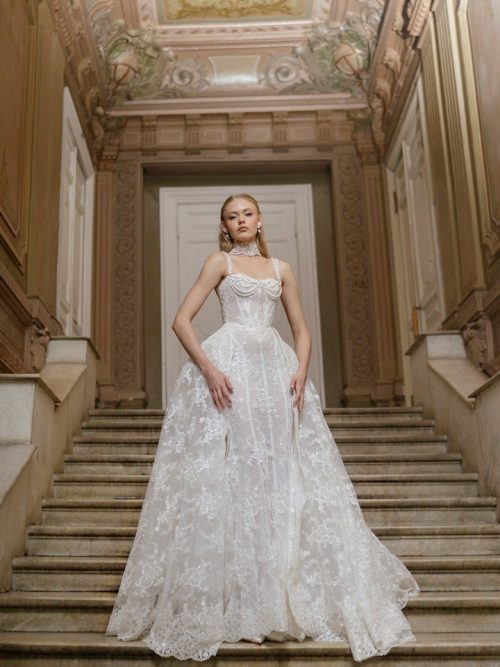
Espirando
-
Sale!
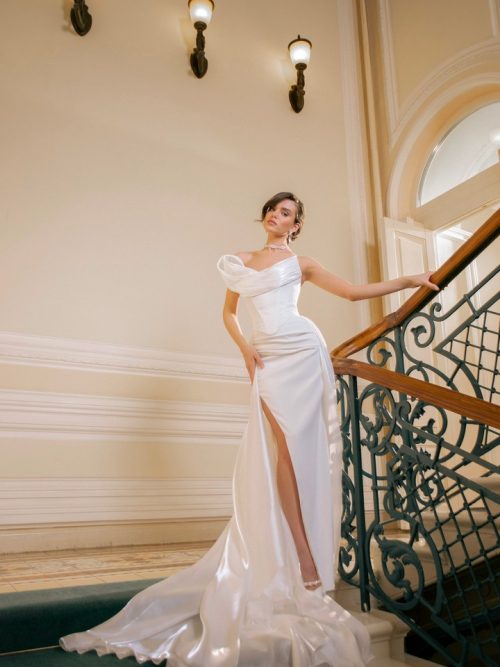
Litea
Original price was: $4,907.00.$2,454.00Current price is: $2,454.00. -
Sale!
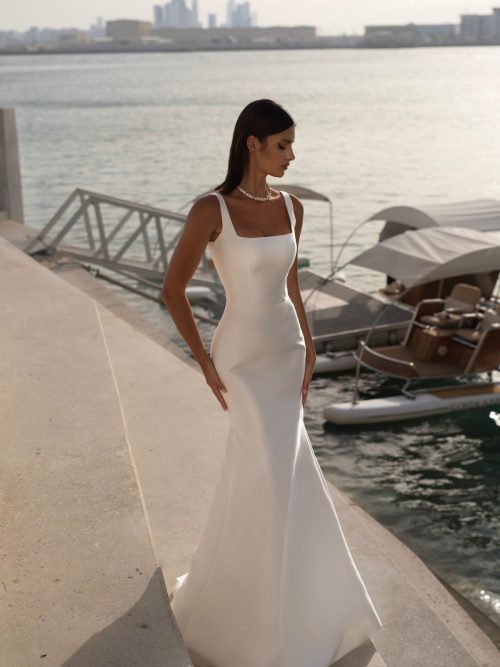
Farzet
Original price was: $3,546.00.$1,773.00Current price is: $1,773.00. -

Lofgrein
$4,700.00 -
Sale!

Beauty
Original price was: $4,859.00.$2,430.00Current price is: $2,430.00. -
Sale!
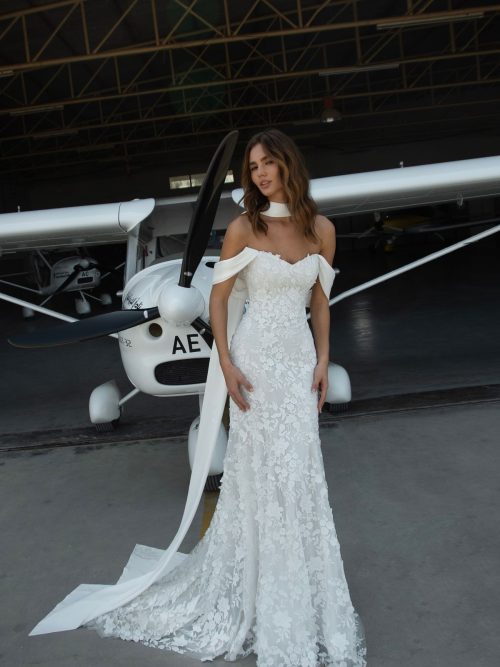
Luminara
Original price was: $4,559.00.$2,300.00Current price is: $2,300.00. -
Sale!

Maja
Original price was: $4,259.00.$1,890.00Current price is: $1,890.00. -
Sale!

Lari
Original price was: $4,659.00.$1,900.00Current price is: $1,900.00. -
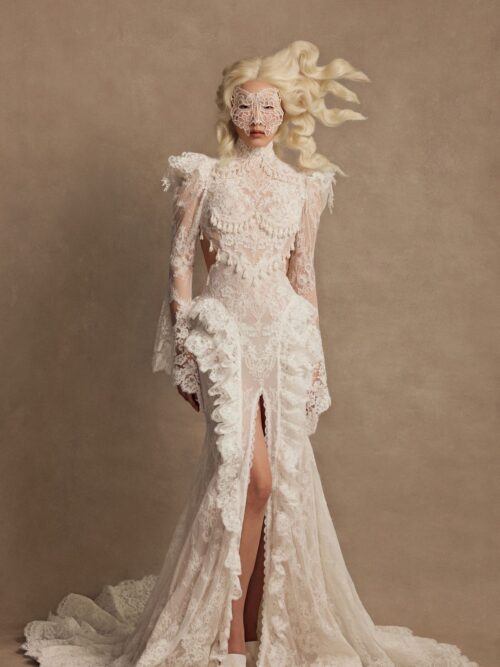
Sultry
-
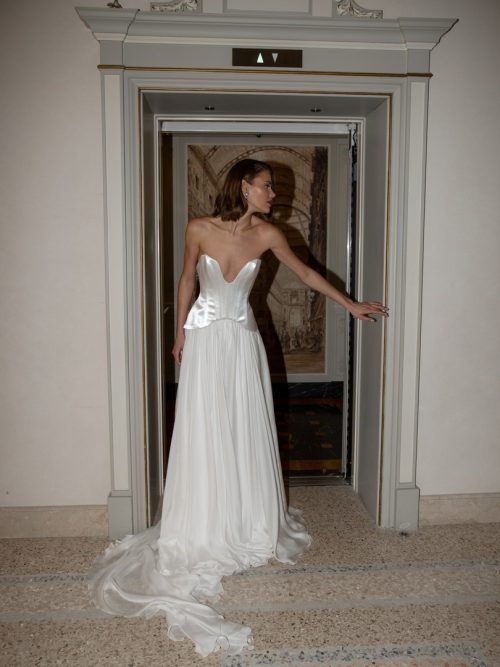
Kristi
-
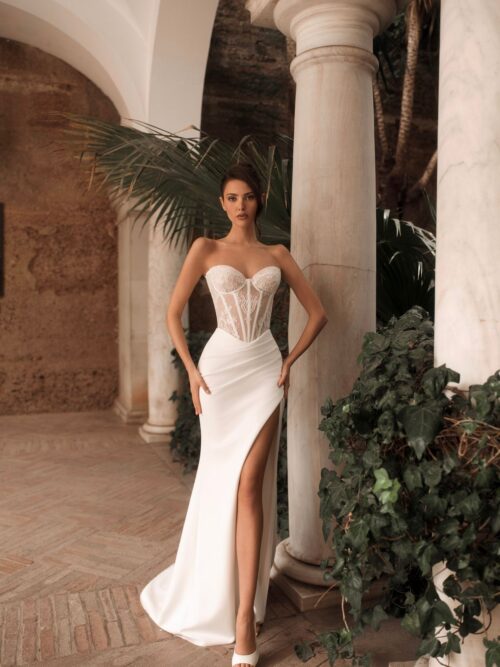
Trento
-
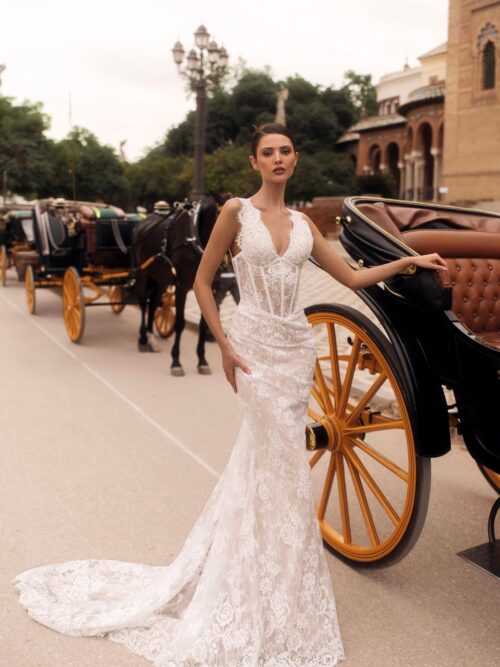
Ilary