 Elegant
 Simple
 Two Piece
 A-Line
 Convertible
 Fit & Flare
 Mermaid
 Midi
Midi Princess
 Sheath
 Short
Short Wedding Jumpsuits
- Which silhouettes work best with lace?
A-line, fit-and-flare, mermaid, sheath, and modified ballgown silhouettes all work beautifully with lace. The texture of the fabric adapts to the cut of the gown rather than dictating it. A-line is the most popular foundation for lace because the clean shape gives the pattern room to read clearly across the bodice and skirt.
- What lace silhouette suits a petite bride?
Petite brides usually look best in A-line, fit-and-flare, or sheath silhouettes with smaller-scale lace patterns. Avoid heavily layered lace ballgowns, which can overwhelm a smaller frame. Look for delicate Chantilly lace or fine Alencon with proportional motifs that keep the visual balance of the gown in line with your height.
- Can a curvy bride wear an all-over lace silhouette?
Absolutely. A well-built all-over lace gown in an A-line or fit-and-flare silhouette flatters most curvy figures beautifully. Look for sturdy internal corsetry, supportive bodice construction, and lace that has been positioned thoughtfully across the bodice to flatter the bust and waist. Smaller motifs along the bodice with larger ones across the skirt usually balance the silhouette best.
- What silhouette suits a long-sleeve lace gown?
A-line and sheath silhouettes suit long-sleeve lace gowns particularly well because the clean lines through the body let the lace sleeves do the talking. Fit-and-flare and mermaid silhouettes also work beautifully, especially when the lace continues from the sleeves through the bodice into the skirt. Match the formality of the silhouette to your venue.
- Does a mermaid lace silhouette suit a beach wedding?
A mermaid lace silhouette can work for a beach wedding when the lace is lightweight and the train is moderate. Heavier corded lace with a long train struggles on sand and in coastal breezes. Look for fine Chantilly lace, soft fit-and-flare cuts (which start to flare at the upper thigh rather than the knee), and a brush or sweep train.
- What silhouette suits a lace gown for a garden wedding?
A-line and modified A-line lace silhouettes suit garden weddings beautifully. The shape moves easily on grass, lifts gently in soft breezes, and photographs stunningly in natural light. Avoid heavily trained silhouettes that pick up grass, dirt, and petals. A bustled train option for the reception lets you have a longer ceremony train without complications.
- Can I have lace on only part of the gown silhouette?
Yes. Many brides choose a lace bodice with a smooth satin or tulle skirt, or a smooth bodice with a lace skirt, or lace appliques scattered across an otherwise plain silhouette. This balance lets you enjoy the romance of lace without it dominating the gown. Your bridal consultant can show options across the spectrum at your appointment.
- What lace silhouette suits a tall bride?
Tall brides have the most flexibility. They can carry fuller lace ballgowns, longer lace trains, and more dramatic mermaid lace silhouettes that shorter brides find overwhelming. Larger-scale lace motifs hold their visual weight against a longer line, while smaller motifs can read busy. Try silhouettes across the spectrum to see which suits your overall proportions best.
- How does silhouette affect how lace photographs?
The silhouette influences how lace catches light. A-line, mermaid, and fit-and-flare silhouettes spread the lace pattern across the body and skirt, photographing beautifully in natural light. Sheath and column silhouettes hold the lace closer to the body, producing a more sculptural effect. Ballgown silhouettes show lace dramatically across a wider canvas.
- What silhouette suits a vintage lace look?
Vintage lace looks suit A-line, modified ballgown, and tea-length silhouettes especially well. Think classic Chantilly lace, soft layered tulle underneath, sweetheart or scoop necklines, and refined detailing along the hem. The team at Dell’Amore Bridal can guide you through vintage-inspired silhouettes during your appointment at their Auckland boutique.
- What's the difference between Chantilly, Alencon and French lace?
Chantilly is fine, delicate and floral with a soft tulle base; it’s the most classically romantic. Alencon is heavier, with corded outlines around the motifs and a more sculpted look. “French lace” is a broader term covering both, plus other styles like Solstiss. The choice changes the mood from soft and ethereal to structured and rich.
- Is all-over lace too traditional for a modern bride?
Not at all. All-over lace can look very modern in the right cut: a slip silhouette in fine French lace, a fitted sheath with no train, or a contemporary A-line with clean shoulders. The lace is the texture; the cut decides whether it reads traditional or modern.
- What is a lace bodice?
A lace bodice is the top section of the gown, from waist up, made of lace (often layered over silk or illusion mesh). It’s a popular way to add lace to a dress without committing to all-over lace. Pair with a plain satin or tulle skirt and you have a classic mix-and-match bridal look.
- Does lace suit beach weddings?
Lightweight lace works beautifully on beaches, especially boho-style fluid silhouettes in fine Chantilly or stretch lace. Heavier corded laces and beaded lace can feel too rich for sand. Browse the lace wedding dresses collection for both light and structured options.
- How do I keep lace from snagging or tearing?
Be mindful around rough surfaces (stone walls, jewellery clasps, rough wood, velcro, watch faces). Pin hair with smooth pins rather than rough bobby pins. After the day, store the gown wrapped in acid-free tissue or have it professionally cleaned and boxed. Most lace will outlast you if treated kindly.
- What's the difference between lace appliqué and lace fabric?
Lace fabric is a continuous bolt of lace, used to cut whole panels of the dress. Lace appliqué is individual lace motifs (flowers, vines, scrolls) hand-placed on illusion mesh or tulle. Appliqué allows asymmetry and graduated detail that flat lace fabric can’t easily do.
- Can lace wedding dresses be altered easily?
Lace can be altered, but it’s more delicate than satin or crepe. Hemming corded lace cleanly requires re-finishing the scallop edge by hand. Taking in a heavily beaded bodice means re-positioning beads. Build extra time into your alteration schedule and use a seamstress with bridal lace experience.
- Does white lace photograph well?
Yes, beautifully. Lace catches light differently to plain fabric, which gives photographs depth and texture even in flat lighting. Off-white and ivory laces tend to photograph softer and more natural than pure white, which can read very stark against many skin tones.
- Are lace sleeves itchy or scratchy?
High-quality lace, especially Chantilly and fine French lace, feels light and soft against the skin. Cheap synthetic lace can scratch. The biggest comfort difference is whether the sleeve is lined or unlined. Lined lace sleeves feel completely smooth; unlined gives a more direct lace-on-skin feel.
- What's the difference between beaded lace and plain lace?
Beaded lace has small beads, pearls, sequins or crystals sewn onto the lace pattern, which adds sparkle and weight. Plain lace is the lace fabric alone. Beaded lace photographs richer, especially under evening light, but feels heavier and is more delicate during alterations.
Show filters
Lace
-

Lofgrein
$4,700.00 -
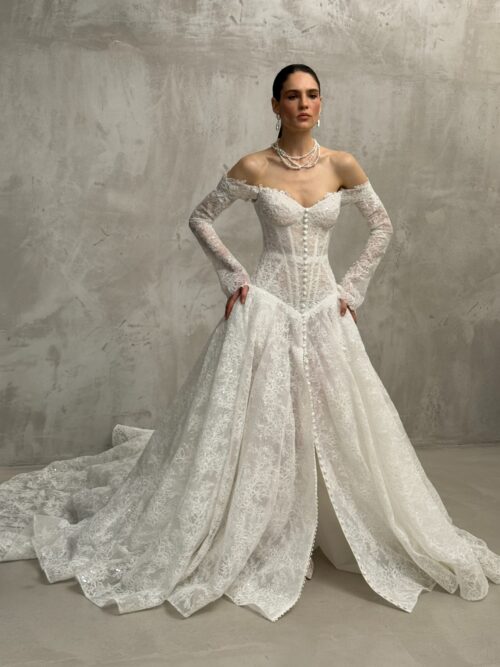
Guimard
$4,100.00 -
Sale!

Beauty
Original price was: $4,859.00.$2,430.00Current price is: $2,430.00. -
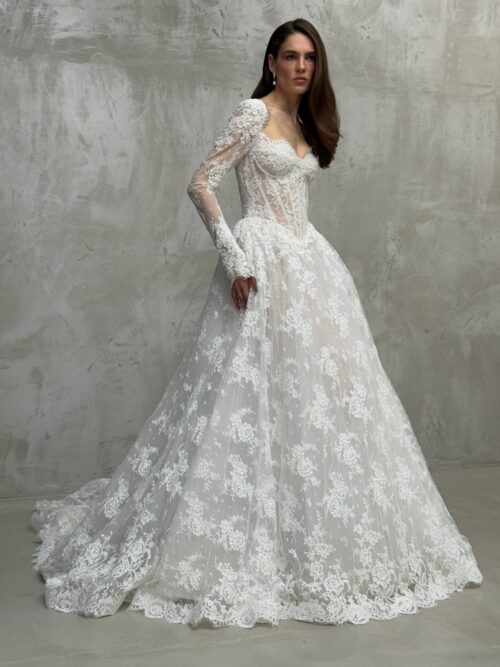
Liberty
$3,850.00 -
Sale!
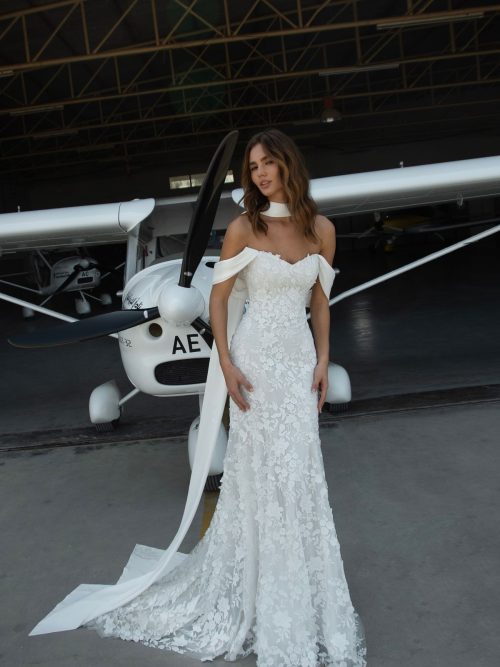
Luminara
Original price was: $4,559.00.$2,300.00Current price is: $2,300.00. -
Sale!

Yiri
Original price was: $4,259.00.$1,925.00Current price is: $1,925.00. -
Sale!

Lari
Original price was: $4,659.00.$1,900.00Current price is: $1,900.00. -
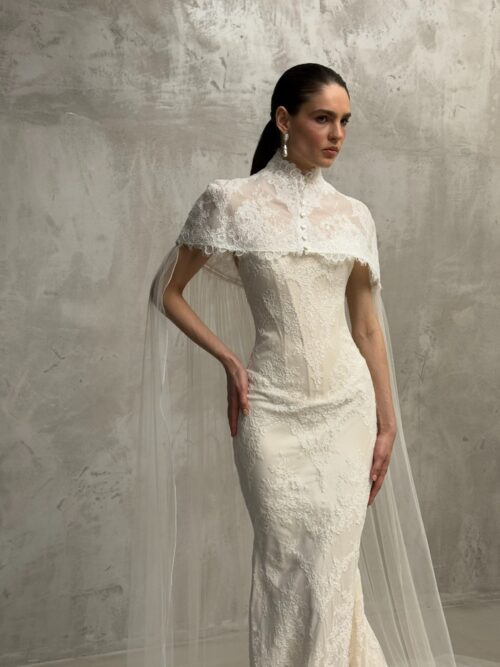
KLIMT
-
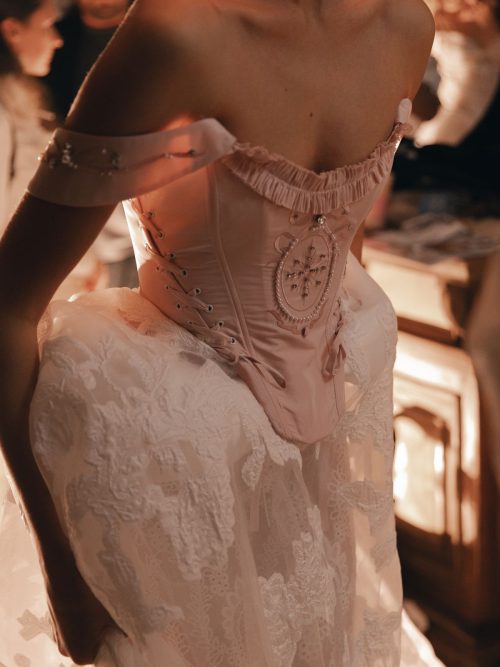
Antuanetta
-
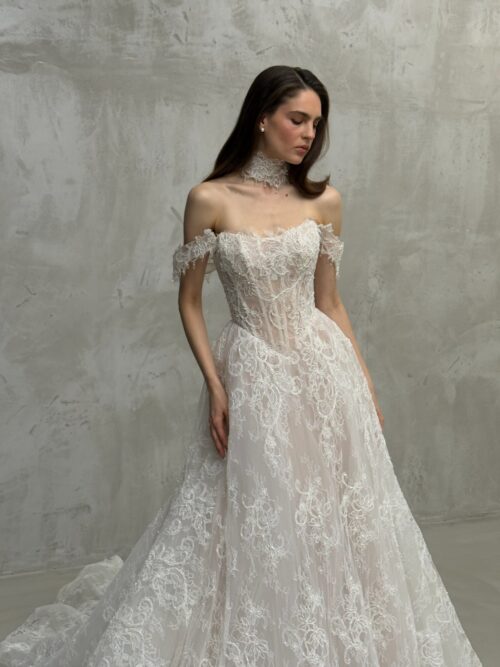
ARKEL
-
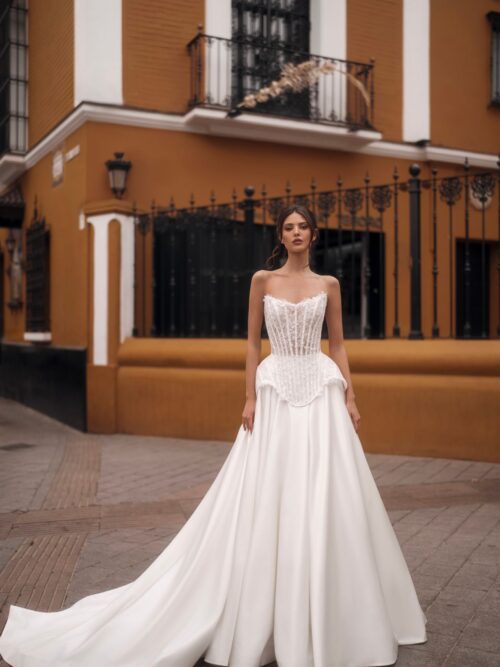
Shema
-
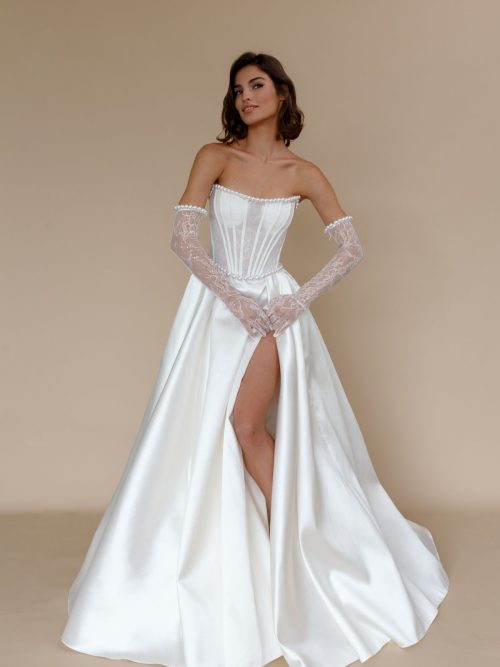
Geme